Performing Under Pressure – When Being Good at Your Job Sometimes Isn’t Enough
Dr Emma Tallini shares why clinical skills and knowledge aren't always enough in stressful, high-pressure or emergency situations when your brain can't think logically.
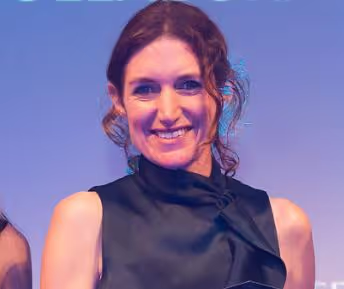

Over the past 10 years, I have become fascinated by how our brains work when we are in high-pressure situations and how this impacts our performance and clinical outcomes. Through my own experiences in practice, I’ve realised that clinical knowledge and skills aren’t the only components of being a good vet or vet nurse, and in fact, they’re completely useless if stress or panic leaves you unable to access them. In this blog, I’ll reflect on a pivotal moment in my vet career that highlighted how the way we think changes when we’re under pressure, and share some tools for decision-making in veterinary emergencies.
My Experience
The moment of revelation for me was during a particularly stressful GDV surgery.
I loved surgery; it was my thing.
I’d performed GDV surgeries before and was sitting at a comfortable 100% success rate.
So far, so good.
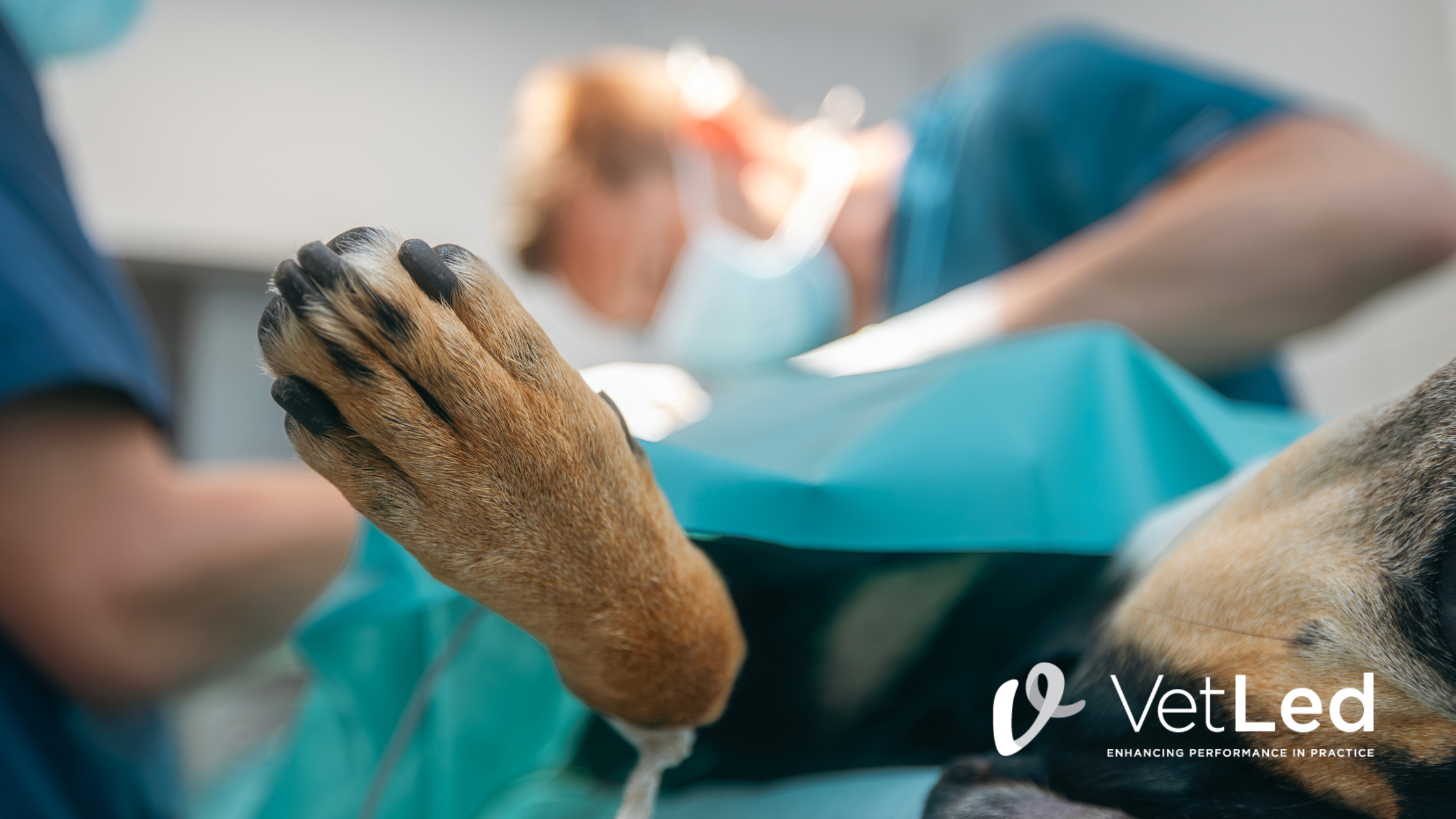
This case was different. It came in collapsed with no heartbeat, so we’d already performed a minor miracle in getting it back. We knew we were up against it, but opening the dog up and seeing the black stomach, it was clear we’d have our work cut out.
Thankfully, I worked in an amazing team, and with a colleague’s assistance, we resected most of the stomach. All was going well. but pexying this now significantly shrunken organ to the body wall was far more challenging than I had anticipated. In the process, I nicked the diaphragm. I felt a jolt of panic as the adrenaline surged through me. I tried to think of what I needed to do, but my brain felt like treacle; I couldn't achieve any clarity of thought. I just didn’t know what to do next. As I flustered and tried to correct the situation, I completely failed to communicate with the nurse or other vets, my focus condensed to a pinprick on the one problem I was trying to solve, and I lost all situational awareness and perspective. I made increasingly irrational decisions, unable to evaluate the situation as it was evolving. A tension pneumothorax developed, and the dog crashed again, at which point a colleague scrubbed in to take over. He recovered the dog and successfully completed the surgery.
I felt broken. I was a good surgeon and a logical clinician. If a colleague had asked me for help in that situation, I would have been able to advise on exactly what to do. Instead, I had felt completely lost in that moment, and my lack of ability to make decisions combined with my lack of awareness was dangerous.
Moving Forward
It was an uncomfortable experience, but it started me on a journey of understanding about how the brain works when under stress. It highlighted how stress can cause challenges with communication, situational awareness, and decision-making that may lead to poor clinical outcomes. Speaking to nurses and other vets, I realised I wasn’t alone in experiencing this, but being of a perfectionist mindset, we would often hold ourselves fully responsible for our failure to deliver in these moments. We would tell ourselves we needed to be better, to work harder, to not fail.
But what if being good is sometimes not enough?
How do we create a safety net to protect us when our brains are in overdrive, and our performance drops off a cliff?
The Answer
I realised the answer was to stop trying to solve it all on my own, to lose my ego and accept that the success and failure of each case is due to team performance and not an individual hero. Once accepted, this creates a new mindset.
Being in a team creates resilience. The failure of a team member can be countered by others and together you can create an environment for success, even when the pressure is on, and odds are stacked against you. That is essentially what happened within my team that day, but only when things got critical, and it was nearly too late to salvage the situation.
.png)
So, how can we train as a team to perform effectively in high-pressure situations?
I found the answer in immersive simulation training, recreating high-pressure scenarios and learning the skills required to work effectively when the patient parameters are all going in the wrong direction, and adrenaline is pumping. Simulation allows the team to practice communicating, leading, delegating, and decision-making in a safe environment with no risk to patient safety. Debriefing after the simulation allows errors to be explored in a positive, constructive way, allowing each individual to reflect on how they respond to stress and learn tips and tricks to continue to perform effectively.
Working at the University of Surrey gave me a unique opportunity to develop this training within our undergraduate programme, and the feedback from students was overwhelmingly positive. The impact reached far beyond the idea of decision-making under pressure, and created a sense of team cohesion. Students reflected on how the simulations improved their respect for and awareness of the different roles within the team and taught them how they could work together to achieve optimal results.
Immersive simulations are stressful, in that moment, the crisis feels real. It’s uncomfortable, but this stress allows you to test drive your human factors skills in a meaningful way and to feel the impact when you get it right. When everyone understands what is going on and is pulling in the same direction to achieve success.
How does VetLed help?
At VetLed, we are excited to move this training into clinical practice, and we are offering a course for individuals who are inspired to work with their own teams to improve performance in high-pressure situations.
We will train you to deliver immersive simulation training with your practice team and upskill you in the art of debriefing, so you can create impactful learning for your whole team. Creating a positive environment where everyone works together is challenging, but we believe this course will set you up to lead the change in your practice.
The next course starts in March 2026, and you can find out more and book your place here.